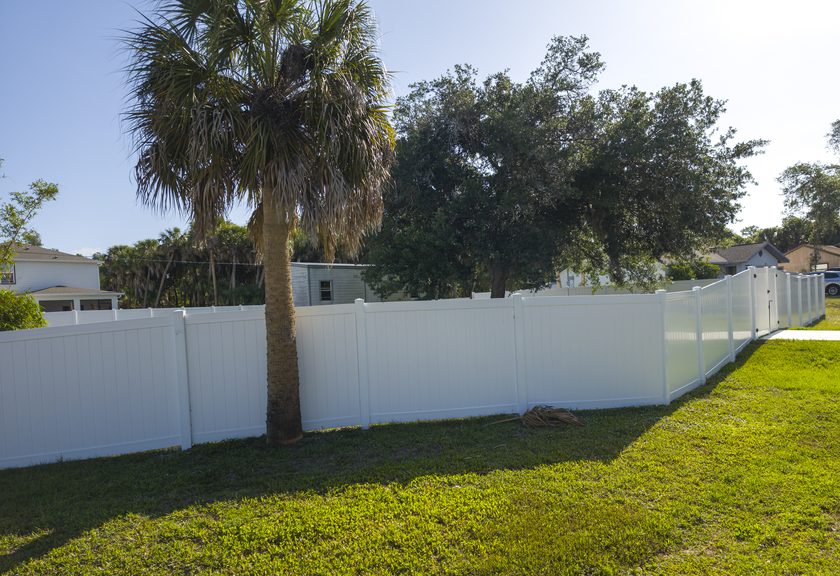
Palm Bay Fence & Gate handles vinyl fence installation for homes across Palm Bay, from one side yard to the full perimeter of a quarter-acre lot. Most of the vinyl we’re asked about is solid white privacy panel, but semi-private, picket and colored styles are part of the work as well.
Vinyl is a popular back yard fence in many Palm Bay neighborhoods. It gives real privacy between houses that sit close together, it is not painted, and the look stays even from one section to the next.
When we come out, we look at where the fence runs, how tall it should be, how many gates you want and how wide, and anything in the path, such as a swale, a slab, a tree root or an old fence that has to come out first.
If part of the yard wraps a pool, say so. Vinyl can form part of a pool enclosure, and aluminum fencing is the other common choice around water.
Call 321-635-0242 or send the form for a free vinyl fence quote.
Free quote. No obligation.
Mixing styles is common. A privacy fence along the back and sides with a lower picket section in front is a familiar Palm Bay layout.
The run is measured from the survey markers and strung out with a line. Gate openings, corners and the ends of each run are placed first, because vinyl sections come in set widths and the posts have to fall where the panels need them.
Holes are dug for each post, the posts are set plumb and to the right height, and they are usually anchored in concrete. Corner, end and gate posts carry the most strain, and they often get extra reinforcement inside the hollow post.
Rails slide into the routed openings in the posts, and the boards fit into the rails. On a solid privacy panel, the top rail closes it all in. Post caps go on last.
Vinyl gates are framed, often with a metal insert inside the frame so they hold their shape, and hung on hinges built for vinyl. A wide double drive gate usually gets a drop rod to keep the inactive leaf in place.
Heat and humidity affect vinyl differently from wood, and it isn’t unbreakable. A solid panel catches the full force of the wind, and in a strong storm the weak point is usually a post that lifts or a panel that pops out of its rails. On a vinyl fence, the posts and their footings deserve as much thought as the panels.
Sun matters too. White vinyl reflects heat and keeps its color well, while darker vinyl absorbs more of it. Mildew is the everyday nuisance, mostly on shaded sides and near sprinklers, and it rinses off.
If a storm does knock panels loose, the sections can often go back in or be swapped out. The fence repair page covers what to do after wind damage.
Most people choosing a vinyl fence have weighed it against the other two. Each has strengths and trade-offs.
Plenty of yards use two of them, such as vinyl along the sides and aluminum across the back facing a pond.


No two back yards take the same amount of vinyl, so a number comes only after a free visit to measure. These details shape the price of vinyl fence installation:
If you are deciding between materials, ask for vinyl fence installation and another option to be priced side by side.
In a shady, damp spot, mildew and algae can tint the panels, especially on the side facing away from the sun. Mild soap, water and a soft brush usually take it off. A pressure washer on a low setting also works, held well back from the surface.
Yes. On a gentle grade the panels are usually stepped, with each section set a little higher or lower than the last. Some vinyl styles can be racked to follow the slope instead, and the grade is measured on site before the style is settled.
Light items such as a small planter are fine with the right clips. Heavy loads and anything screwed straight through a panel can crack or loosen it, so ask before mounting a shelf, a hammock or a gate of your own.
Ready to see what a vinyl fence would take? Call 321-635-0242 or use the form, and we’ll arrange a time to come and measure.
Chain link, fencing a new lot and the towns we cover are on the home page, and you can reach us from the contact page.